
Maybe the Best Value Step-Thru E-Bike
For Starters
If you’ve been hanging around my site for a while, then this likely isn’t the first Velotric (say Velo like ‘hello’ and tric like ‘trick’) you’ve seen me review. If not, you can check out those reviews here: Discover 2, Velotric Comparisons, & Summit 1. Today we’re looking at an upgrade to the Discover 1 – the Velotric Discover 1+.
Velotric is starting to get a pretty solid list of bona fides. They are sold in over 1,000 stores in the U.S. The bikes are designed in California, and they are uncompromising in safety. Every battery is UL certified not only meeting the European standard but also the higher U.S. standard. The other way safety standard they are proud of is the ISO rating. The frame of the Discover 1+ is 150% stronger than what it is required to be by this standard, meaning this bike can handle 440 lbs. of total capacity.
Brakes, Tires, and Lighting
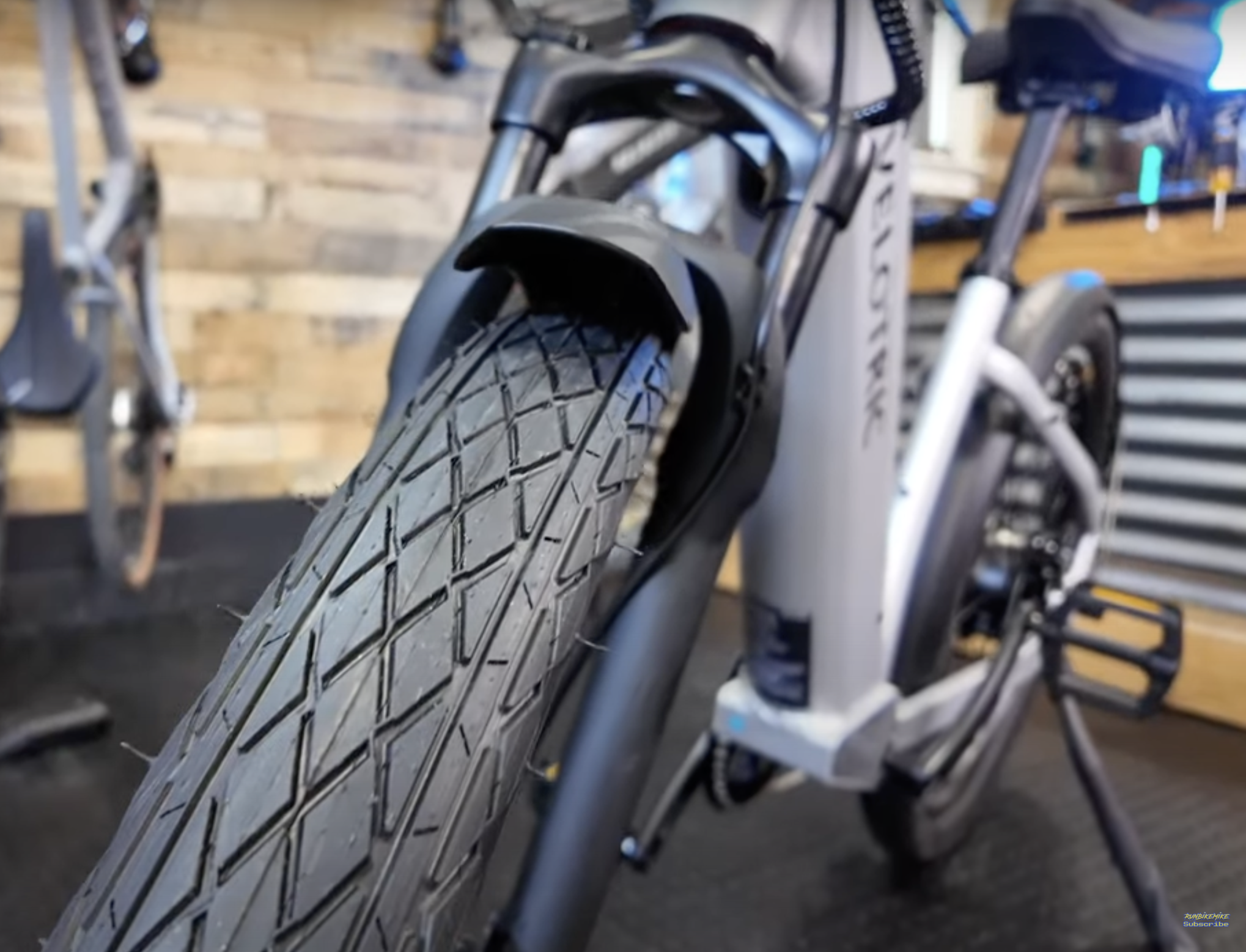
The Discover 1+ comes with 2-piston hydraulic brakes with 180mm rotors. The tires are 2.5″ wide road tires on 26″ rims. The tires are shielded with fenders and built into the rear fender is a tail light. The headlight on the Discover 1+ is upgraded 15 lux* over the original Discover 1.



Comfort and Design
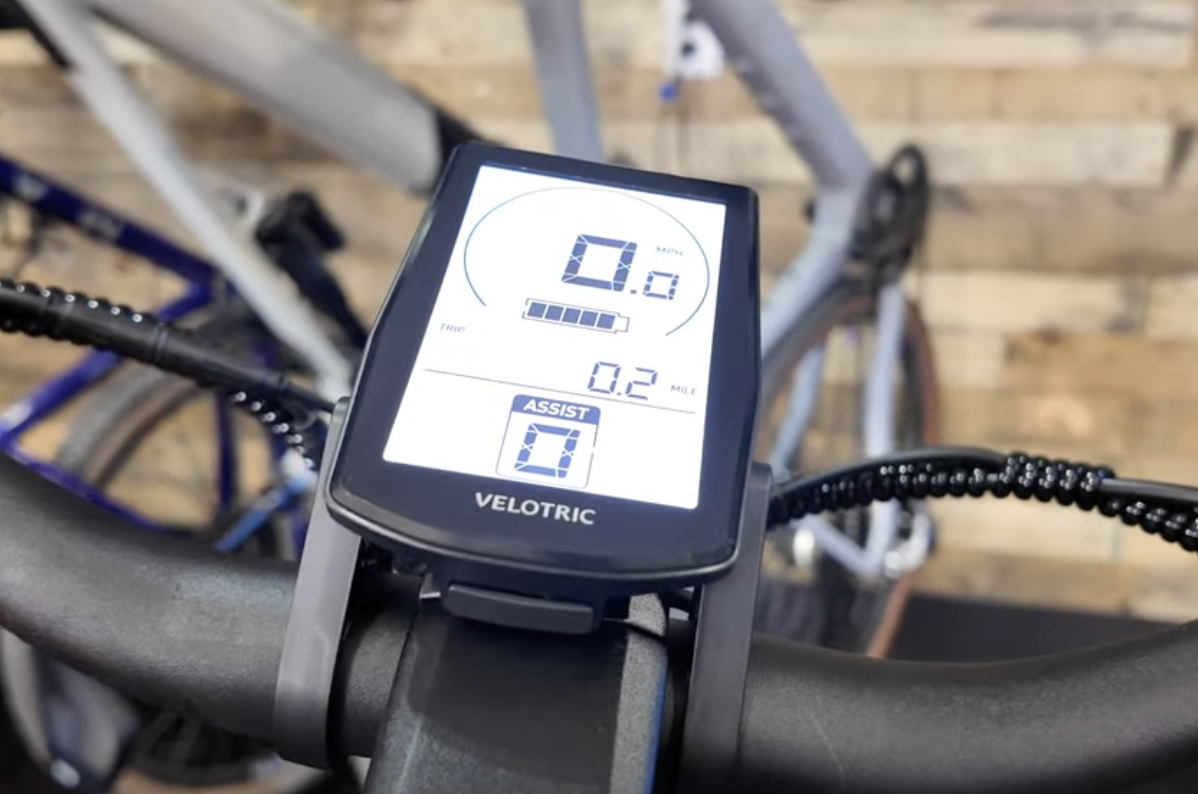
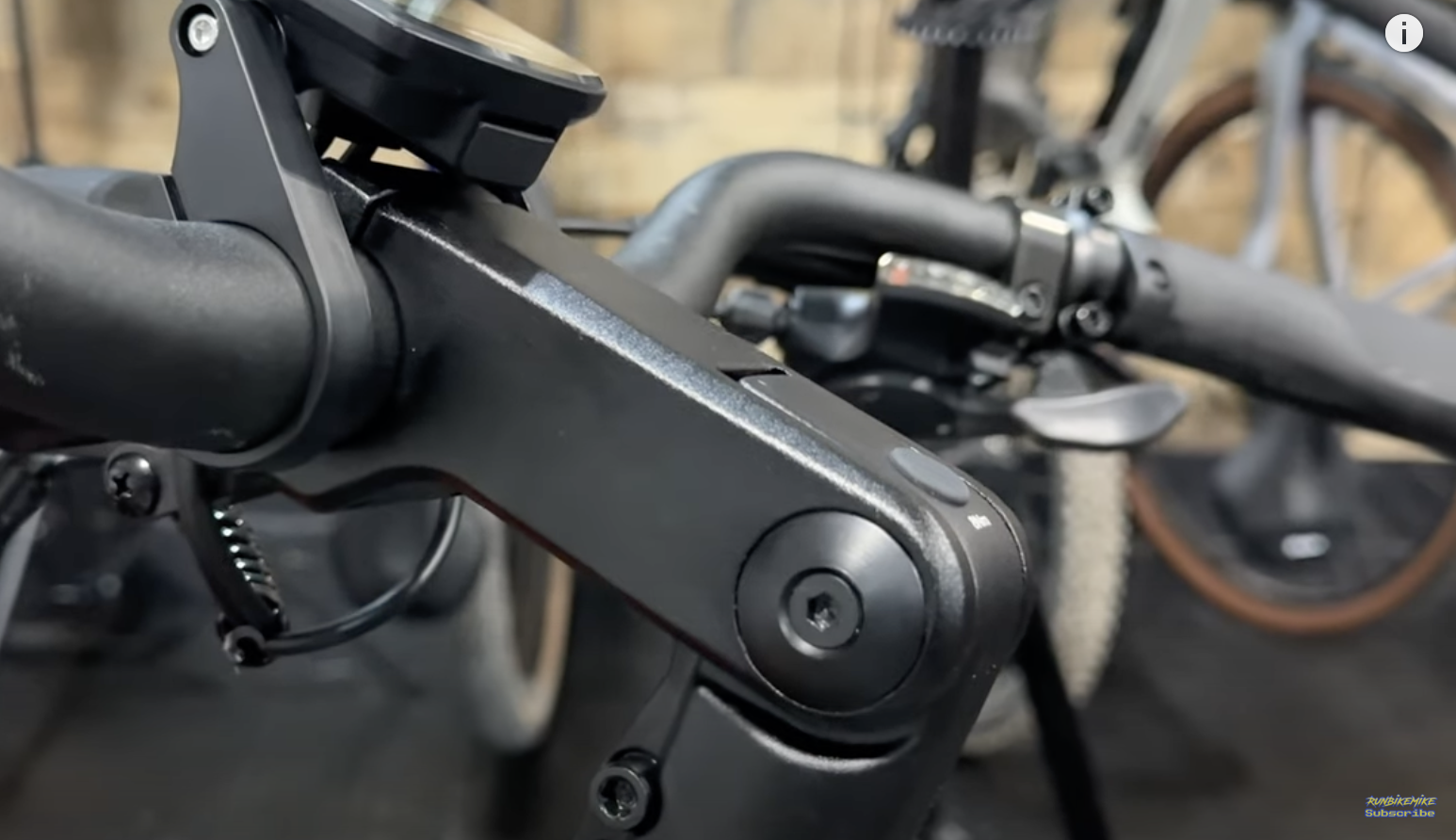
The cockpit is comfortable with swept back bars and ergonomic grips. In the middle of those bars is a non-color, LCD screen. I found that it was easy to see in bright light and at night with no issues. Something the Discover 1+ model has that the Discover 1 didn’t have is an adjustable stem. This makes the bike feel way more customizable and comfortable across varying heights. This is a class 3 eBike, and the thumb throttle is located on the left side of the bars, along with the power button, pedal assist controls, and a bell. The front suspension on the Discover 1+ has been upgraded to 80mm of travel from the 60mm available on the Discover 1.



Drivetrain
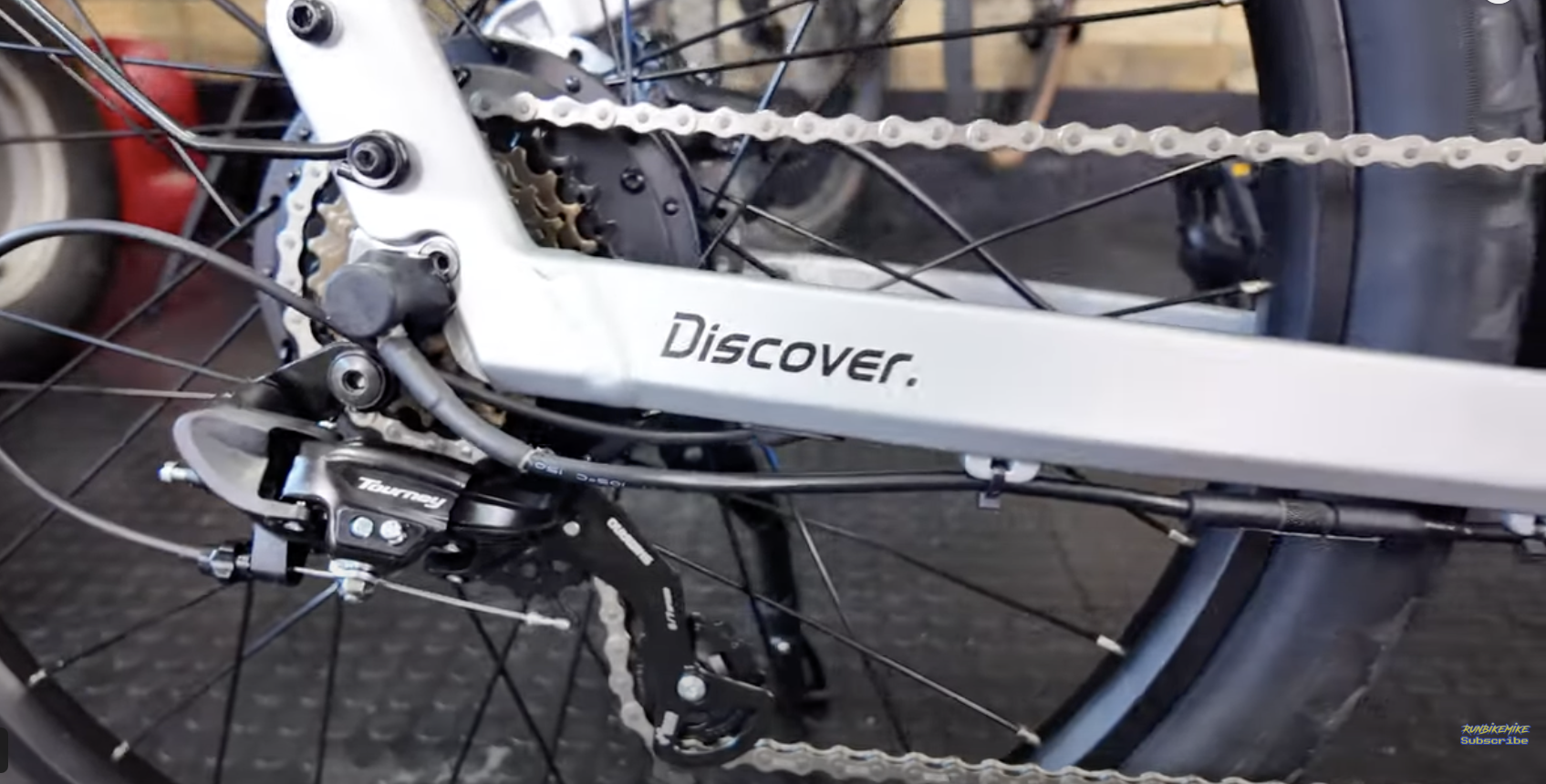
The 7-spd Shimano Tourney rear derailleur is controlled by a Shimano under bar shifter with an easy-read dial. The chainring is a 46T on this Discover 1+ model. The previous model just had a 42T. This should help to keep you from feel like you’re spun out on the pedals.

Battery and Motor
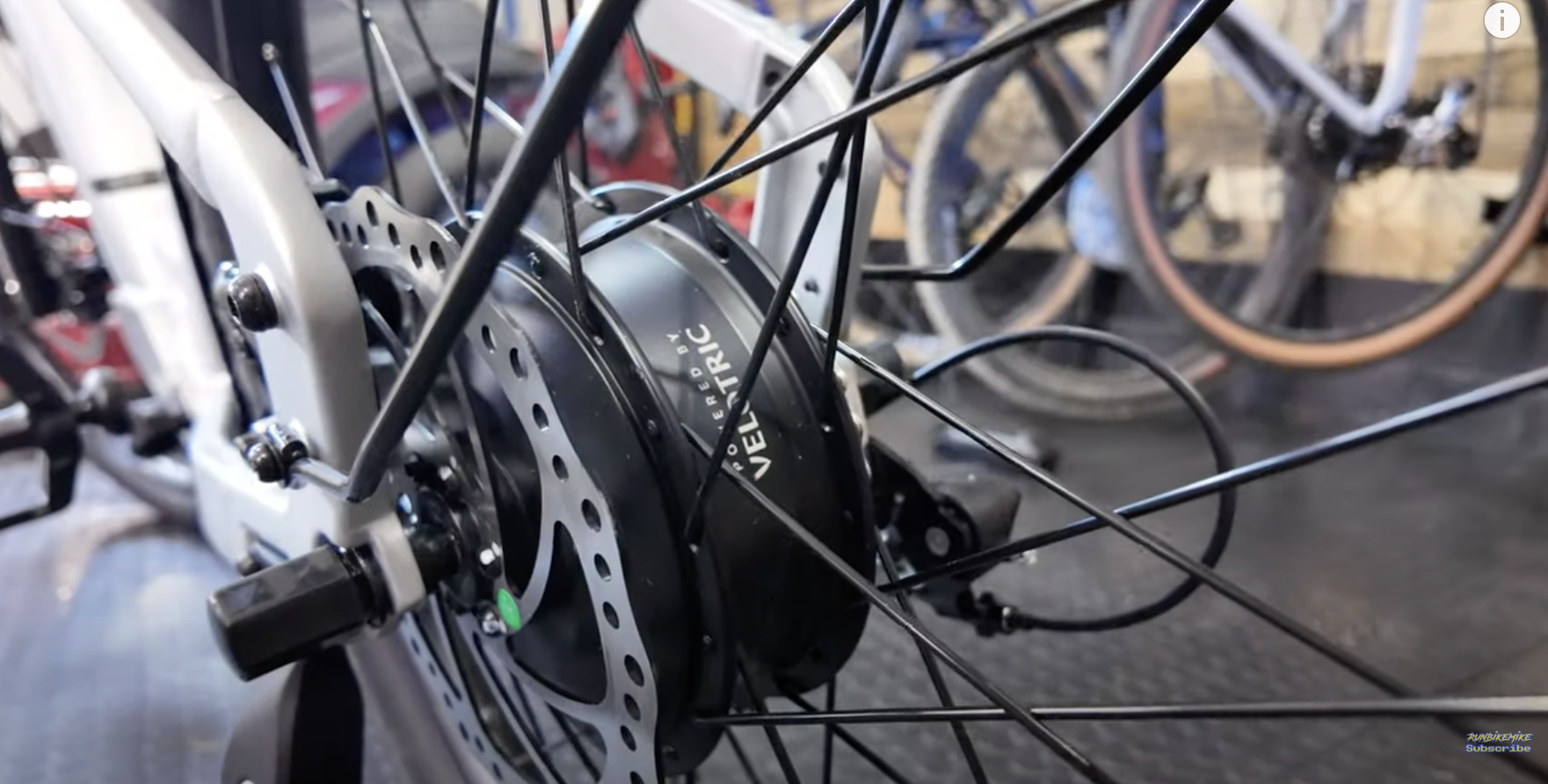
The Discover 1+ has a 690 Wh battery on a 48 volt system. In pedal assist one, on relatively flat ground, Velotric says you should get around 65 miles of range. That battery is powering a proprietary Velotric rear hub motor providing 500 watts of sustained power with a 900 watt peak. Velotric recommends that this bike be used in areas with no more than about 8% grade hills, so if you live in a hillier area, you might check out the 750 watt motor on the Discover 2. See how the Discover 1+ did on the 19% hill in my video (6:54).
Thoughts
The 2.5″ wide tires on the Discover 1+ feel confidence inspiring at speed, and the brakes felt just as good when stopping. The cadence sensor kicked in very quickly, and the larger 46T chainring kept me from ghost pedaling even at 28+ mph. The riding position is very comfortable and the bike is really quiet for a chain-driven bike, bordering on belt-drive territory.
Pros
- The bigger tires on this bike vs. some others (2.5″ wide on 26″ hoops).
- Swept-back handlebars. I love a hybrid that is very up-right and comfortable.
- Step-thru design with only a 15″ step-over height.
- The larger chainring and lack of ghost-pedaling.
- IPX7 battery – UL certified
Cons
- I wish it had a rear rack, but I kind of get it at this price point. Very entry level.
- I wish it had the upgraded display available on the Discover 2, but again… I understand for the price.

Conclusion
If you want to pick up the Discover 1+ (or even upgrade to the Discover 2), I’d really appreciate it if you used my links. It won’t cost you any extra, but it really helps out the channel. Until next time – Get out there, and ride your bike.
Discover 1+ https://alnk.to/aeYDKYp
Discover 2 https://alnk.to/6TAf7uY
*One lux (1 lux) of light is a measure of the light density, equivalent to 1 lumen per square metre (lm / m^2). So, two lights with a similar lumen output rating might have drastically different lux ratings depending on how dense or how focused the light beam is.

 runbikemike.com